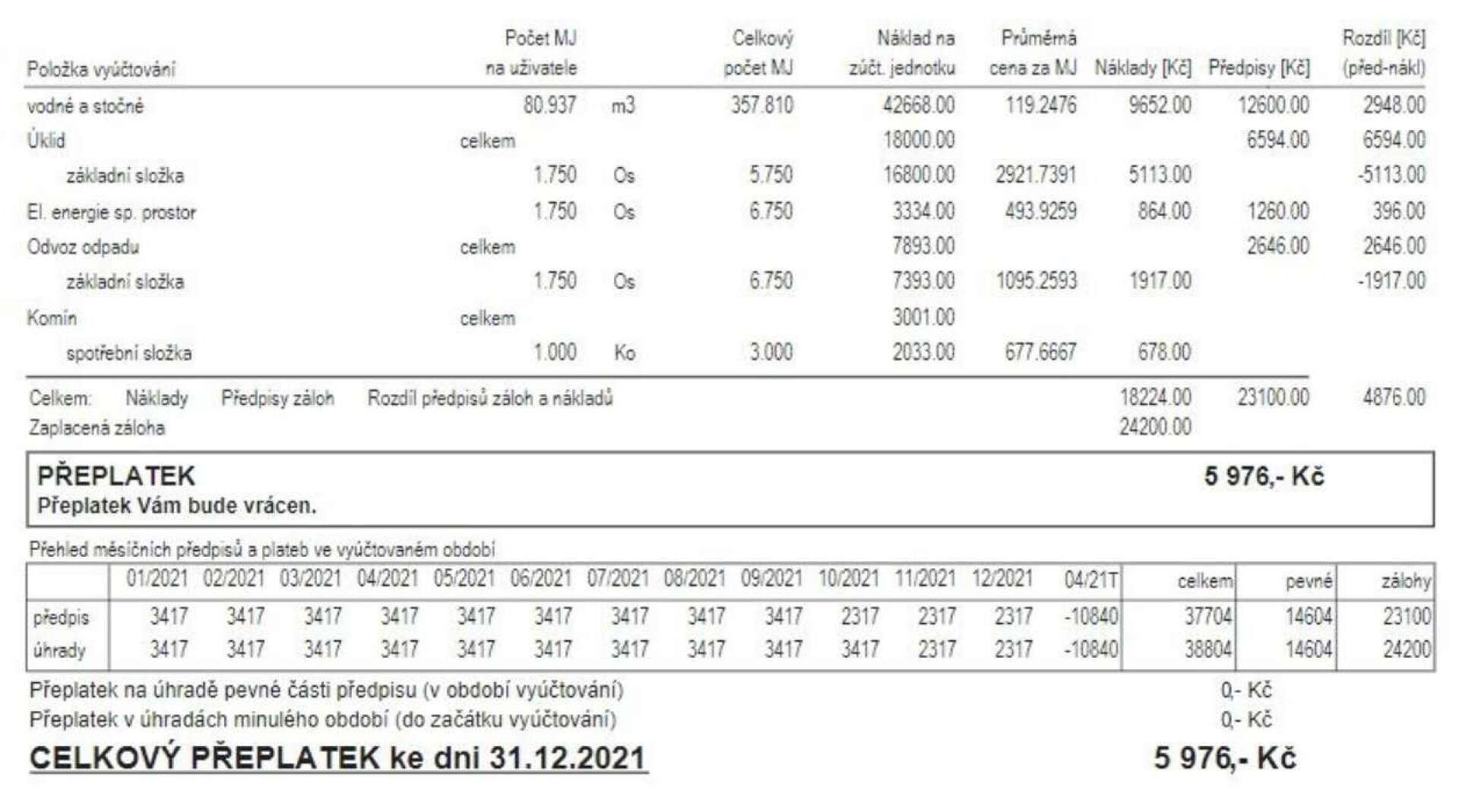


The utility and service charge statement for the year 2023 was prepared based on the data and prices available at the time of the termination of the sublease agreement. After receiving the final settlement from the homeowners’ association (SVJ) or utility/service providers, the actual consumption and costs were clarified. This is a standard procedure due to the typical delay in obtaining final figures.
For this reason, an additional rebilling is necessary to ensure a fair and legally required adjustment of actual costs in accordance with the real data for the relevant period.
The goal is always to ensure that the final costs reflect the actual consumption and valid rates for the specific calendar year. Once the exact values are received from the SVJ or providers, we are obliged to make the final adjustment — whether it results in an additional payment (underpayment) or a refund of any overpayment.
In cases where the subtenant continues to occupy the property into the following year (e.g., until March 2024), but the final annual settlement is not yet available, we withhold an amount of CZK 1,000 per month of occupancy in that year when settling the security deposit. This reserve is intended to cover any potential discrepancies after the definitive statement is received.
This procedure allows us to ensure a transparent, fair, and legally correct settlement of actual costs.
The complete documentation for the final rebilling is usually only available in the following year. Therefore, if the tenancy ends, for example, in April 2024, we prepare the preliminary settlement based on the prices and data available for 2023 at that time.
As the final statement from the homeowners’ association (SVJ) or energy and service providers for the year 2024 is typically issued only in the spring or summer of the following year (i.e. in 2025), we retain part of the security deposit when settling the account — in this case, for example, CZK 4,000 for the period from January to April 2024.
The remaining part of the deposit is then settled only after the final figures are received, in order to ensure fair and accurate rebilling of the actual costs.
The additional rebilling applies exclusively to cases where subtenants no longer occupy the apartment and the tenancy has been terminated. It concerns only final cases in which it is necessary to close the settlement of consumption and costs for the entire sublease period.
AJ: The settlement period always begins on January 1st of the calendar year in which the rebilling takes place (e.g., January 1, 2024) and ends on the date the sublease agreement is terminated.
Attention: In some cases, the sublease agreement may begin later in the year — for example, from February 1st, 2024 to September 19th, 2024. This period is also subject to rebilling, as complete data on consumption and prices for the year is typically not available at the time the tenancy ends. Therefore, an additional rebilling must be carried out using the actual prices and data for the year 2024 once received from the homeowners' association (SVJ) or utility providers.
In all cases, the settlement period corresponds to the validity of the specific sublease agreement within the given year.
Based on the complete documentation, we perform a comparison within the rebilling process between the actual costs paid as reflected in the original final settlement (e.g., based on prices and data from 2023) and the updated data for the year 2024.
The attached table provides a clear overview of the differences between the costs and unit prices in 2023 and those in 2024, which reflect the actual billing from the homeowners' association (SVJ) and changes in the price lists of utility and service providers. In this particular case, it is evident that unit prices have decreased, which is reflected in the overall costs.
This comparison results in a difference that is then settled either by an additional payment (underpayment) or a refund of the overpayment, in order to ensure that the final settlement corresponds to the actual consumption and current prices for the given year.
It is important to note that rebilling generally does not apply to electricity and gas costs, as we usually receive complete invoices from their providers upon request, covering the specific sublease period.
Thanks to this, accurate documentation is already available at the time the final settlement is prepared, and no further rebilling of these items is usually necessary.
Rebilling most commonly applies to services paid through the homeowners' association (SVJ), such as water, heating, cleaning, or building management, as the final SVJ settlement is typically available only during the following year.
However, exceptions must be taken into account. In some cases, rebilling may also apply to electricity, for example, if its supply is included in the SVJ’s billing, or if the provider does not allow the issuance of an exceptional invoice based on the actual sublease end date. In such cases, it is necessary to perform additional rebilling of all cost items to ensure that the settlement reflects the actual consumption and prices for the relevant period.
Settlement period corresponds with the beginning of the year (i.e., January 1st); the billing is conducted based on the actual consumption of the subtenant.
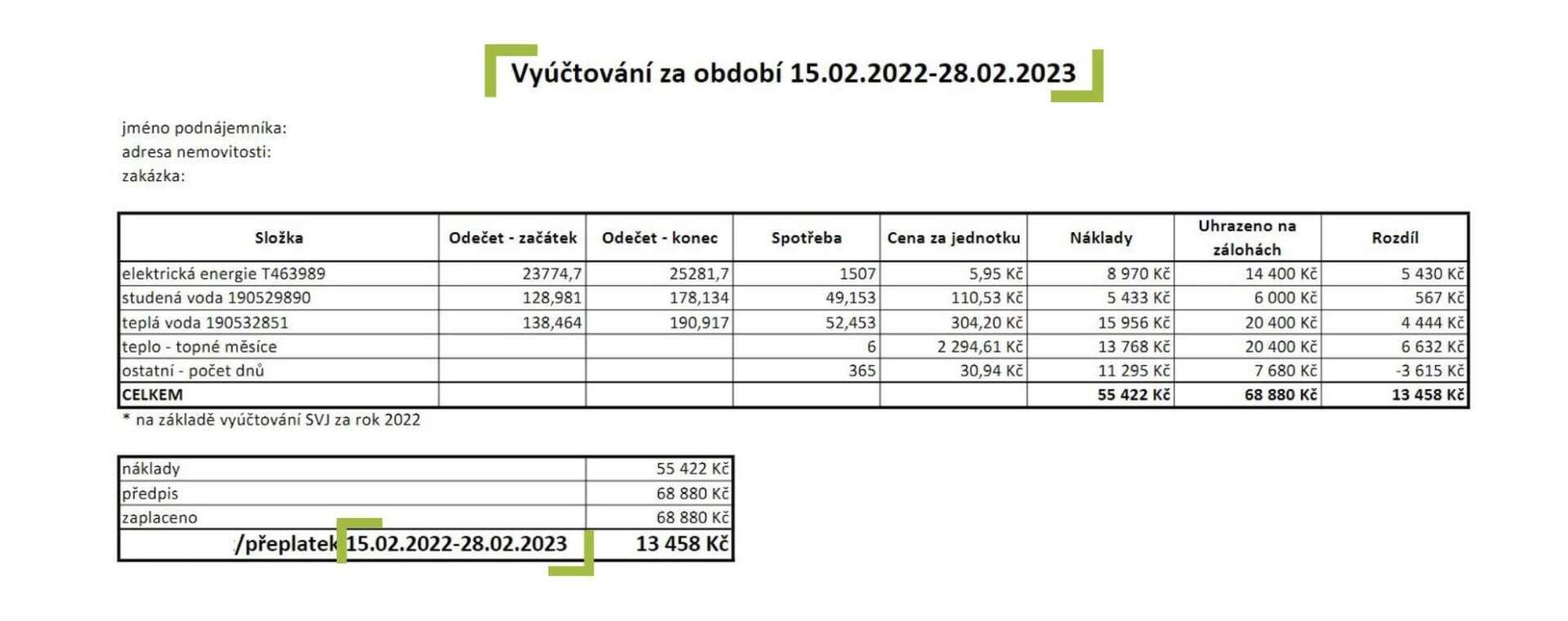
The basis for determining consumption are the meter readings – the initial reading at the handover of the apartment (or the final reading from the last billing) and the final reading upon taking back the apartment from the subtenant.
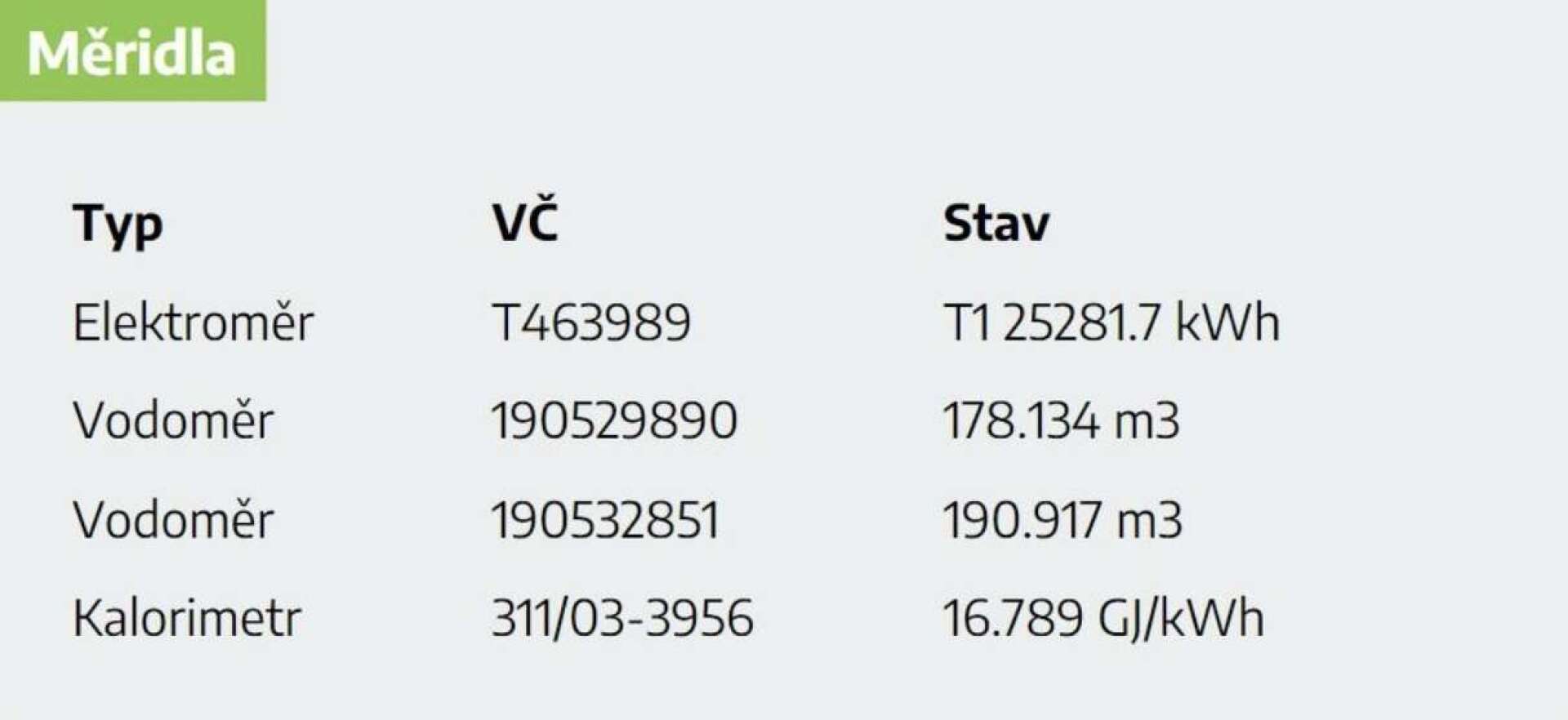
We calculate unit prices based on currently available documents (electricity invoice, gas invoice, homeowners’ association (SVJ) settlement – water, heating, and the item “other”). The actual invoice result (amount of overpayment or outstanding balance) or the amount of paid advances is not relevant for us.
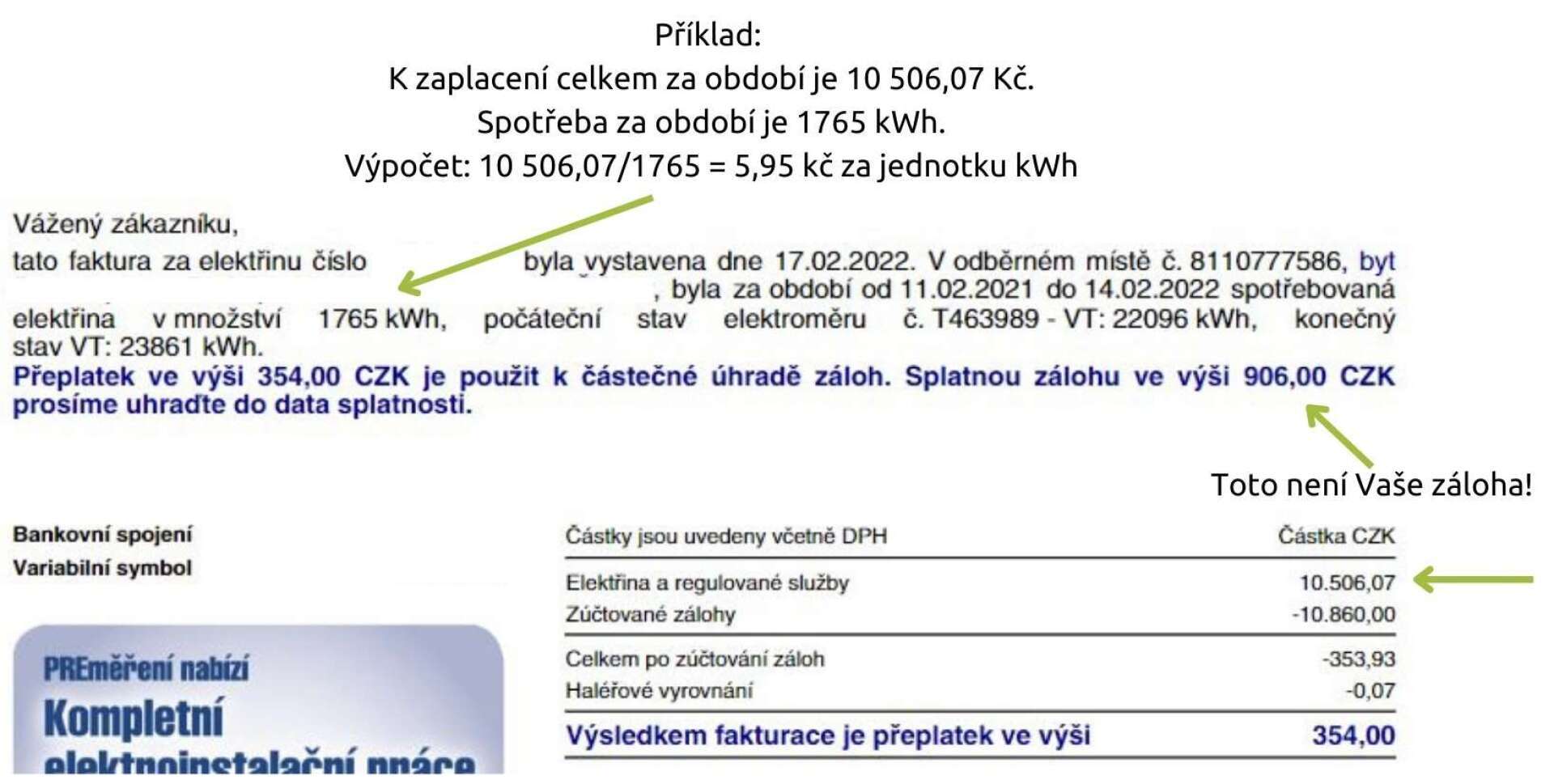
When calculating electricity costs, we determine the unit price per kWh from the invoice (by dividing the total amount on the invoice by the total consumption in kWh) – this unit price is then multiplied by the actual consumption of the subtenant.
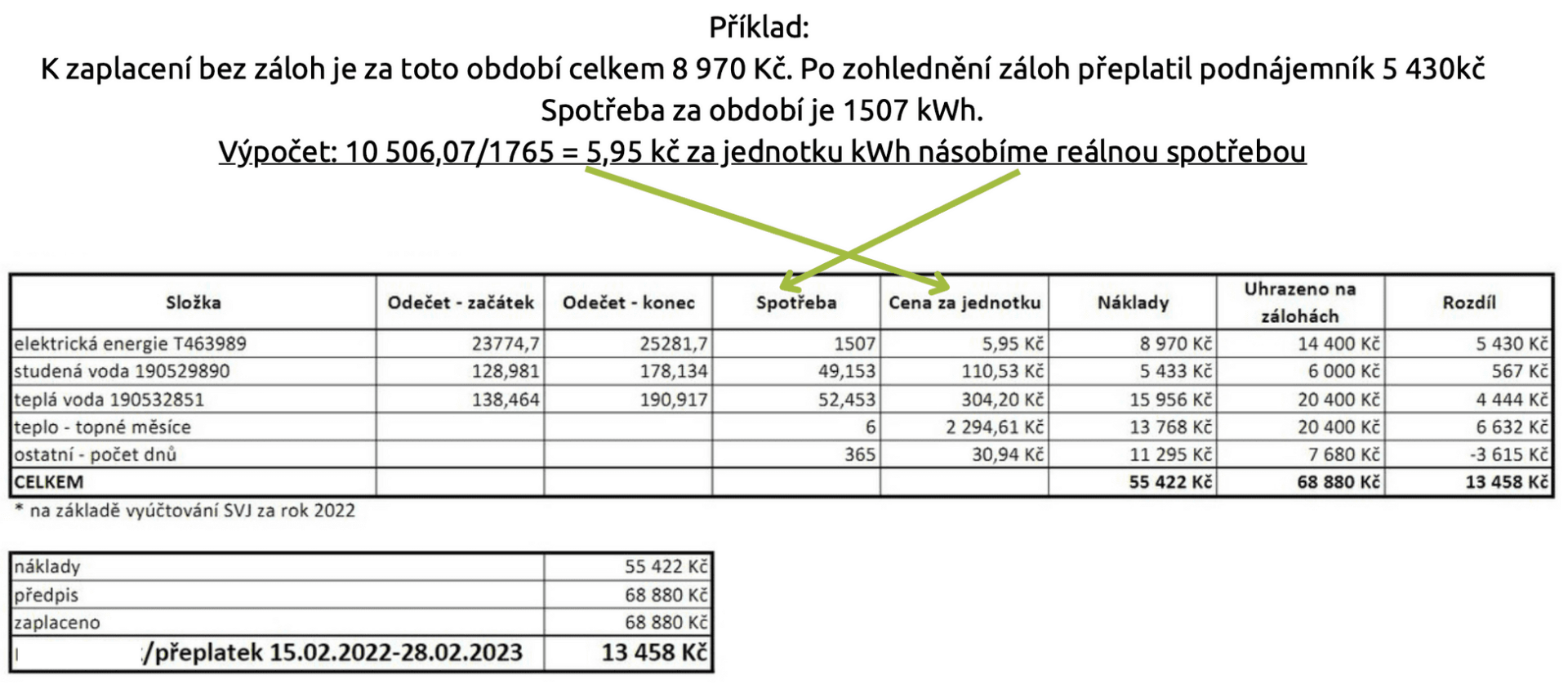
When calculating the costs for cold water, we determine the unit price per m3 (from the billing issued by the Homeowners Association SVJ by dividing the total amount for cold water on the HOA bill by the total cold water consumption in m3) – this unit price is then multiplied by the actual consumption of the subtenant.
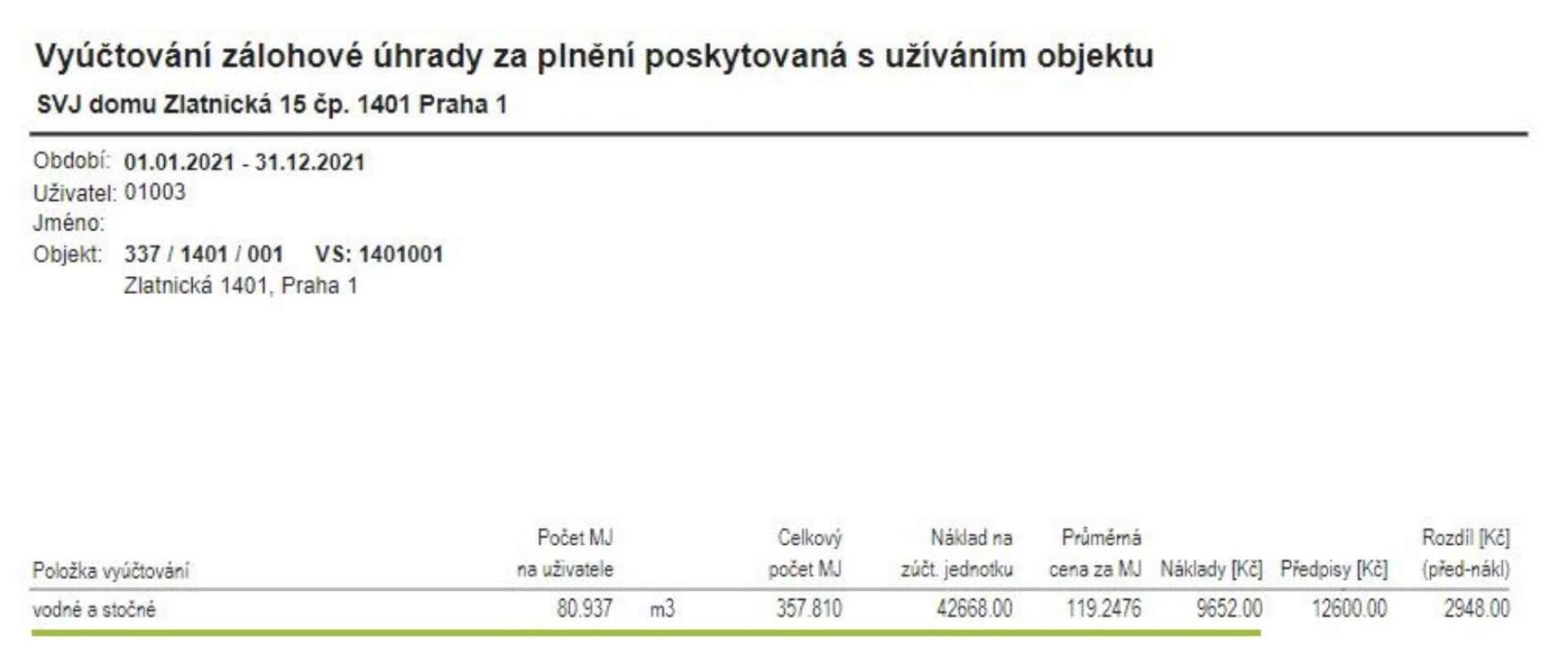
When calculating the costs for hot water, we determine the unit price per m3 (from the billing issued by the Homeowners Association SVJ by dividing the total amount on the SVJ bill for hot water and water heating by the total consumption of hot water (or cold water used for heating in m3). This unit price is then multiplied by the actual consumption of the subtenant.
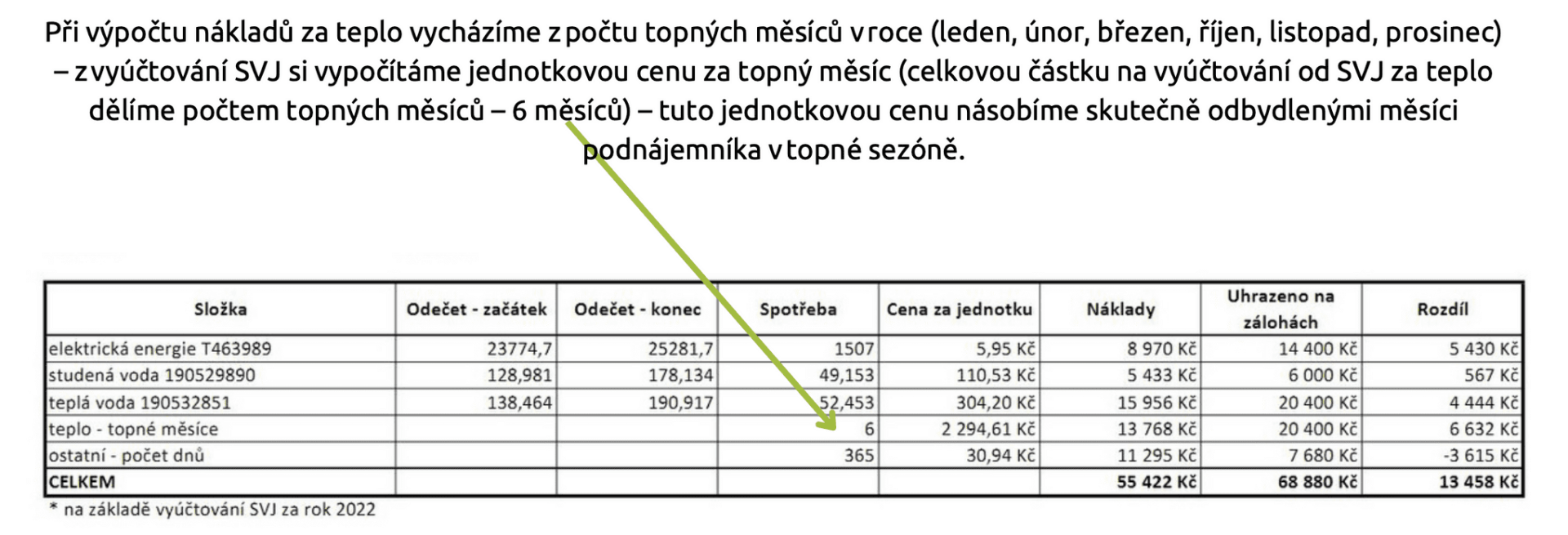
When calculating heating costs, we base the calculation on the number of heating months in the year (January, February, March, October, November, December). From the billing issued by the SVJ (Homeowners Association), we determine the unit price per heating month by dividing the total amount for heating by the number of heating months (6 months). This unit price is then multiplied by the number of months actually occupied by the subtenant during the heating season.
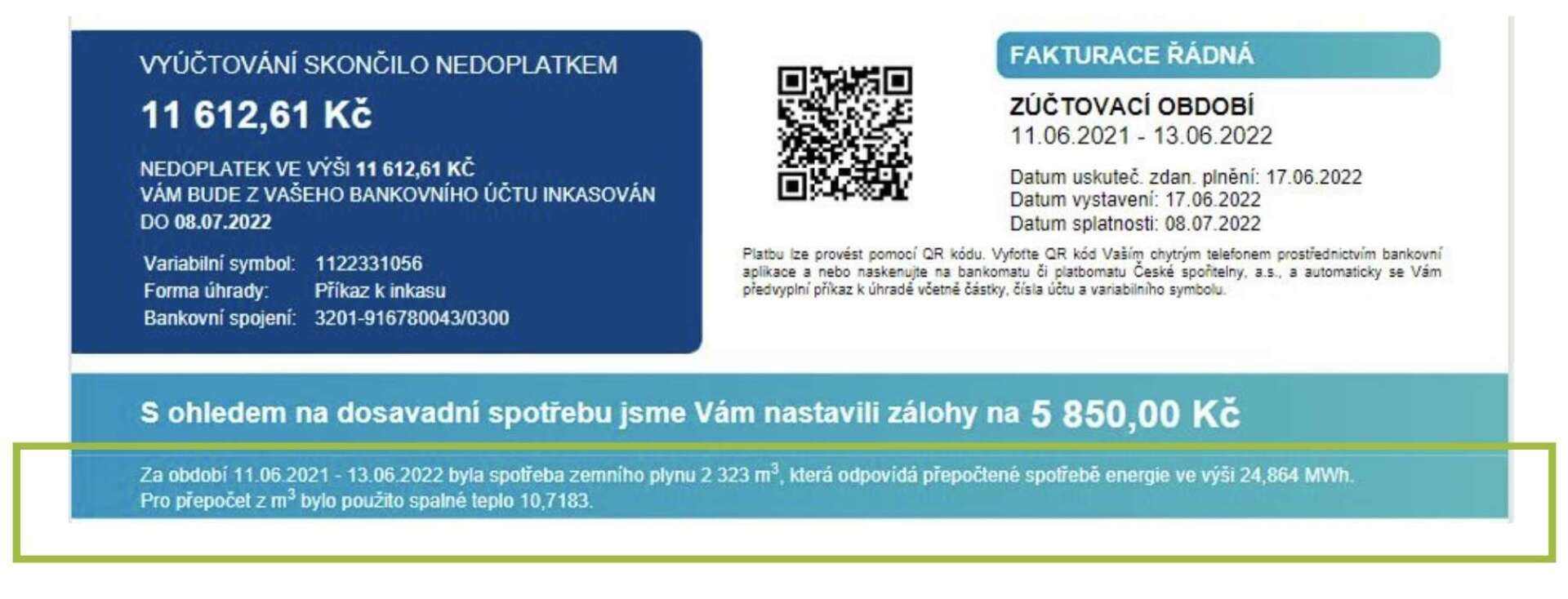
When calculating gas costs, we determine the unit price per m3 from the invoice (by dividing the total amount on the invoice by the total unadjusted consumption in m3). This unit price is then multiplied by the actual consumption of the subtenant (the gas meters show consumption in m3).
The "Other" item includes all additional services listed in the residential building's breakdown, excluding the repair fund, property management, and building insurance — such as common electricity in the building, building lighting, elevator, waste collection, garage, internet, reception, cleaning, overheads, fire alarm monitoring, minor repairs in the building, etc. — depending on what the specific property provides. The costs for these items are divided by the number of days covered by the SVJ billing period, which gives us the unit price per occupied day. This unit price is then multiplied by the actual number of days the subtenant occupied the unit.
Your advance payments may not be the same amount as the advance payments paid by the subtenant.